
For most of the last decade the cloud market was a steady story: Amazon Web Services in front, Microsoft Azure closing in, Google Cloud a distant third, and total spending growing by about a fifth each year. Artificial intelligence has broken that pattern. In the third quarter of 2026, Synergy Research Group estimated that spending on cloud infrastructure services rose about 55% year on year to roughly USD 168 billion, with AI-specific services now about a third of the market. Shares are shifting faster than at any time since the early days of cloud. This post sets out the current figures, the reasons behind them, and what they mean for a business choosing or reviewing a provider.

The numbers for Q3 2026
Synergy Research Group tracks spending on infrastructure as a service, platform as a service and hosted private cloud, which together it calls cloud infrastructure services. It does not count software as a service such as Microsoft 365 or Salesforce, which is why Microsoft’s share here is lower than its total cloud revenue.
How shares moved over two years
The ranking has not changed, but the gaps have. Amazon’s share was about 31% in Q3 2024 and 29% in Q3 2025, according to Synergy, before falling to about 26% in Q3 2026. Google gained the most over the same period, moving from about 13% to 16%. Microsoft has held roughly steady at around a fifth of the market while growing much faster than Amazon in absolute terms.
A falling share does not mean a shrinking business. In a market growing at 55% a year, Amazon can add billions of dollars of revenue a quarter and still lose share. What the trend shows is where new demand is going: towards providers with strong AI offerings and capacity to sell, and towards specialists.
Why AI changed the growth rate
Two things drive the jump in growth. First, companies building and running AI models rent enormous amounts of GPU capacity, which is expensive per hour and therefore adds revenue quickly. Second, businesses are using hosted AI models through platforms such as Azure AI, Amazon Bedrock and Google Vertex AI, which bill per token or per request on top of normal infrastructure.
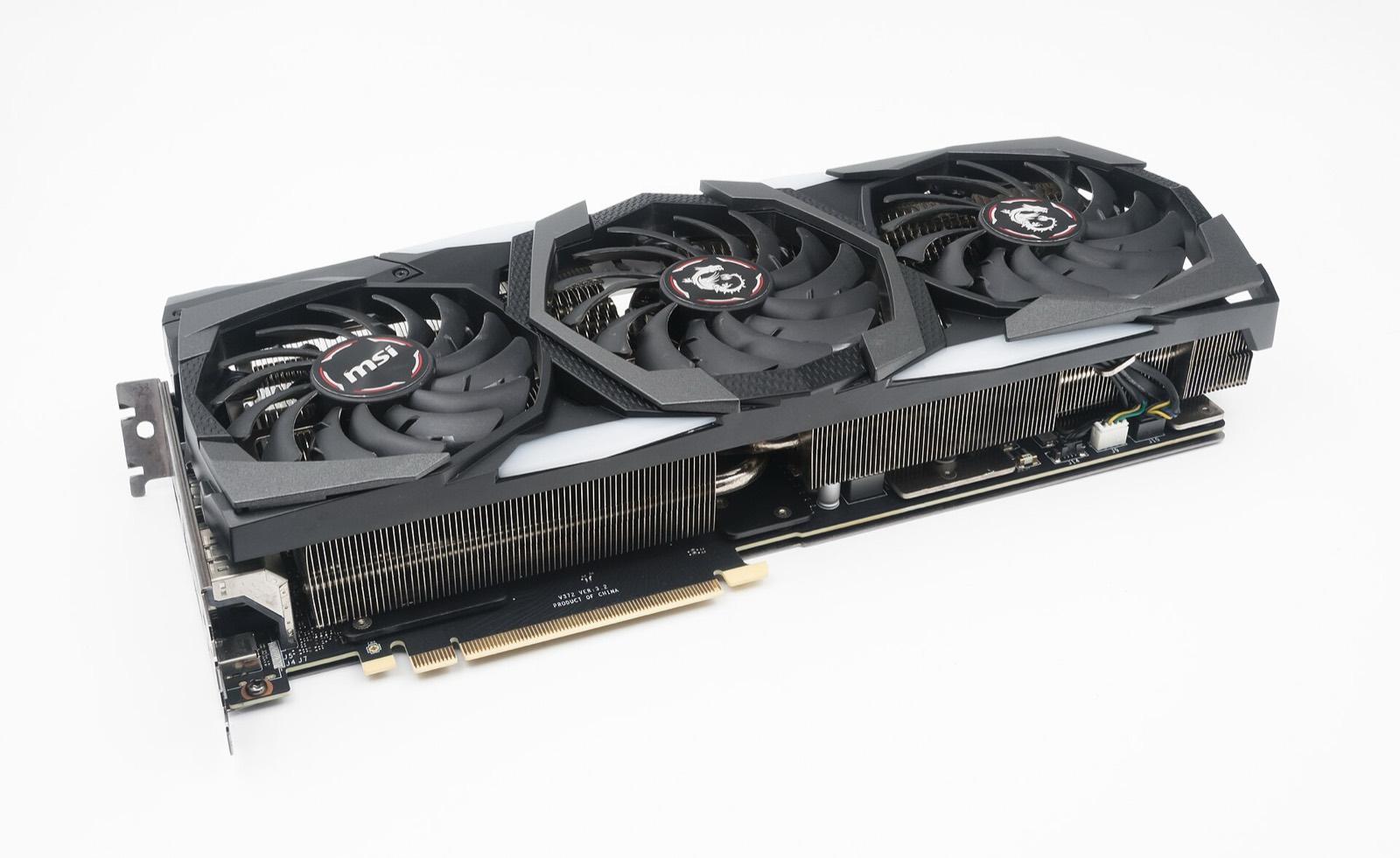
Microsoft’s partnership with OpenAI and Google’s own Gemini models and TPU chips have helped both win AI workloads. Amazon has responded with its own Trainium chips and a large investment in Anthropic, but on Synergy’s figures it has not kept pace with the overall market.
Who the neoclouds are
Neocloud is the industry’s name for providers built mainly to rent GPU capacity for AI. CoreWeave, Nebius, Lambda and Crusoe are commonly cited examples. They tend to offer newer GPUs sooner, simpler pricing for large GPU clusters, and less of the broad catalogue of databases, identity and networking services that the big three provide. Synergy has noted that their growth, along with Oracle’s, is steadily eroding the share of established providers.
| Provider type | Strengths | Weaknesses | Typical buyer |
|---|---|---|---|
| Hyperscalers (AWS, Azure, Google) | Hundreds of managed services, global regions, mature security tooling | Complex pricing; GPU capacity can be scarce | Almost every business workload |
| Oracle Cloud | Strong database story, competitive pricing on some compute | Smaller ecosystem and partner network | Oracle database users, some AI training |
| Neoclouds | Large GPU clusters, fast access to new hardware | Narrow service catalogue; younger companies | AI labs and companies training or serving models |
| Regional and local clouds | Data residency, local support, simple pricing | Fewer services and regions | Businesses with sovereignty or latency needs |
What this means for a business choosing a cloud
It is tempting to read market share as a quality ranking. It is not. A small business running a website, a database and file storage will be well served by any of the big three and by many regional providers. The deciding factors are closer to home.
- Region. Is there a data centre close to your customers and inside the jurisdiction your data needs to stay in? Our guide on choosing a cloud provider for a global business goes into this.
- Skills. Which platform do your staff or IT partner already know well? Familiarity prevents expensive misconfiguration.
- Existing licences. Microsoft licence benefits can make Azure cheaper for Windows and SQL Server workloads.
- AI plans. If you will build on a specific model family, the cloud that hosts it natively will usually be simplest.
- Exit cost. Egress fees and proprietary services decide how hard it would be to leave later.

Concentration risk is the other lesson. With three providers holding most of the market and AI capacity tight, some businesses spread critical systems across two providers. That has real costs; our comparison of single-cloud and multicloud strategies explains when it pays off.
Pricing and capacity: the side effects of the AI boom
The AI boom has side effects for ordinary customers. Providers are pouring capital into data centres, power and chips, and memory prices rose sharply through 2026 as AI servers absorbed supply. GPU instances can be hard to reserve at short notice, and some providers have introduced capacity reservations and longer commitments for accelerated computing. General-purpose compute and storage prices have been more stable, but discounts tied to one- and three-year commitments are now the main way to lower bills.
| Trend | Effect on a typical business | What to do |
|---|---|---|
| GPU scarcity | AI experiments may wait for capacity or cost more on demand | Use hosted model APIs instead of renting GPUs for small workloads |
| Higher memory and SSD costs | Hardware refreshes and some instance types cost more | Right-size instances before committing |
| Commitment discounts | Large savings in exchange for lock-in | Commit only on stable baseline usage |
| New AI service charges | Per-token bills can grow quietly | Set budgets and alerts per project |
The safest response is to keep your options open. Our post on cloud exit planning describes how to make leaving possible even if you never need to.
A sensible cloud strategy for 2027
- Choose your main provider on region, skills and licences, not on headlines.
- Use managed services where they save real effort, and keep data in portable formats.
- Use hosted AI model APIs for most AI features; rent GPUs only when you have a sustained need.
- Review commitments every quarter against actual usage.
- Keep an exit plan and a tested backup outside your main provider.

The market will keep moving quickly while AI demand lasts, and the share figures will change again next quarter. What does not change is the value of a clear architecture and good cost discipline. Our cloud solutions team works across AWS, Azure, Google Cloud and regional providers and can help you compare them for your actual workloads.
Frequently asked questions
Which cloud provider is the largest in 2026?
Amazon Web Services remained the largest with about 26% of cloud infrastructure spending in Q3 2026, according to Synergy Research Group, ahead of Microsoft at about 19% and Google at about 16%.
Why is Microsoft’s share lower than its reported cloud revenue suggests?
Microsoft’s cloud revenue includes software as a service such as Microsoft 365. Synergy’s figures count only infrastructure and platform services and hosted private cloud.
What is a neocloud?
A provider built mainly to rent GPU capacity for AI training and inference, such as CoreWeave or Nebius. They offer fewer general services than the hyperscalers.
Should a small business worry about AWS losing share?
No. Amazon is still growing in absolute terms and remains a sound choice. Share changes reflect where new AI demand is going, not a problem with existing services.
Is it worth using more than one cloud provider?
Sometimes. It adds cost and complexity, so it usually makes sense only for systems where an outage would be severe, or where a second provider offers something the first cannot.
Comparing cloud providers for a new project or a migration? Get in touch with Eudora Technology to talk about your project.
Sources
- Cloud Market Growth Rate Rises Again in Q3; Biggest Ever Sequential Increase
- Synergy: enterprise cloud infrastructure spending jumped 55% YoY in Q3
- Cloud revenue hits $168B as AI capacity expands
- The big three grab two-thirds of $107B cloud market in Q3
- AWS under pressure as big three battle to eat the cloud market
- Neoclouds gradually increasing CIS market share as Amazon declines