Wireless charging has been around for more than a decade, but for most of that time it was a slightly frustrating convenience. Put the phone down a little off-centre and it would not charge; charging was slower than a cable and the phone got warm. Apple’s MagSafe solved the alignment problem for iPhones with magnets, but Android phones were left behind. Qi2, the new wireless charging standard from the Wireless Power Consortium, brings magnetic alignment to every manufacturer, and its faster version, Qi2 25W, is spreading across new phones and accessories through 2026. This guide explains what the different labels mean, how fast wireless charging really is, which phones support it, what power adapter you need, and when a cable is still the better choice.
Key points
- Qi2 adds magnets so the phone always lines up with the charger, making charging more reliable and efficient.
- Standard Qi2 charges at up to 15W; Qi2 25W raises that to 25W on supported phones.
- Many Android phones still need a magnetic case to work with Qi2 accessories, unless they have magnets built in.
- A wireless charger needs a strong enough USB-C power adapter, often 30W to 45W, to reach its full speed.
- Wired USB-C charging remains faster and more efficient; wireless is about convenience.
Qi, Qi2 and Qi2 25W: the labels explained
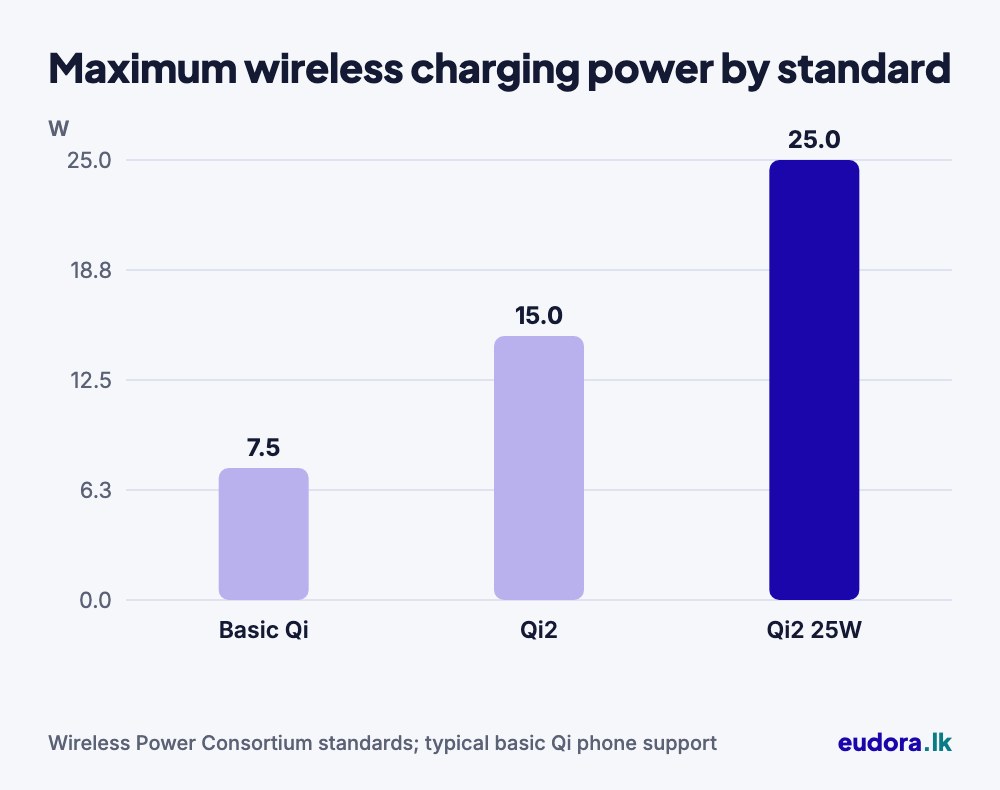
Qi (pronounced “chee”) is the original wireless charging standard used by almost every phone with wireless charging. It works, but alignment is up to you. Qi2 adds the Magnetic Power Profile, based on the magnet design Apple contributed from MagSafe, so phones and chargers snap together in the right position. Qi2 25W, which the industry briefly referred to as Qi2.2, increases the maximum power to 25 watts while keeping the same magnetic alignment.
| Standard | Magnets | Typical maximum | Notes |
|---|---|---|---|
| Qi (original) | No | 5W to 15W | Works with almost all wireless-charging phones; alignment matters |
| Apple MagSafe | Yes | Up to 25W on recent iPhones with compatible chargers | Apple’s own system, the basis for Qi2 |
| Qi2 | Yes | 15W | Magnetic alignment for any manufacturer |
| Qi2 25W | Yes | 25W | Faster version; needs a supported phone and adapter |
Which phones support Qi2 and Qi2 25W?
Recent iPhones support Qi2 and MagSafe, and Apple has added faster wireless charging on newer models and software. On Android, support has grown quickly. Google’s Pixel 10 series added built-in magnets, with the Pixel 10 Pro XL among the first phones to charge wirelessly at 25W, and Samsung’s Galaxy S26 Ultra supports Qi2 charging at 25W with a compatible charger. Many other Android phones support Qi charging but have no built-in magnets; they can still use Qi2 chargers with a “Qi2 ready” or magnetic case that adds the magnet ring, though they will charge at their own maximum wireless speed.
Check your phone’s specifications for three things: whether it supports wireless charging at all, whether it has built-in Qi2 magnets, and its maximum wireless charging power. Many budget and mid-range phones still do not support wireless charging, and for those, a good USB-C charger is the answer.
Note: Magnetic accessories and cases can interfere with some phone features, such as stylus pens on certain models. Check the phone maker’s guidance before adding a magnetic case.
The power adapter matters
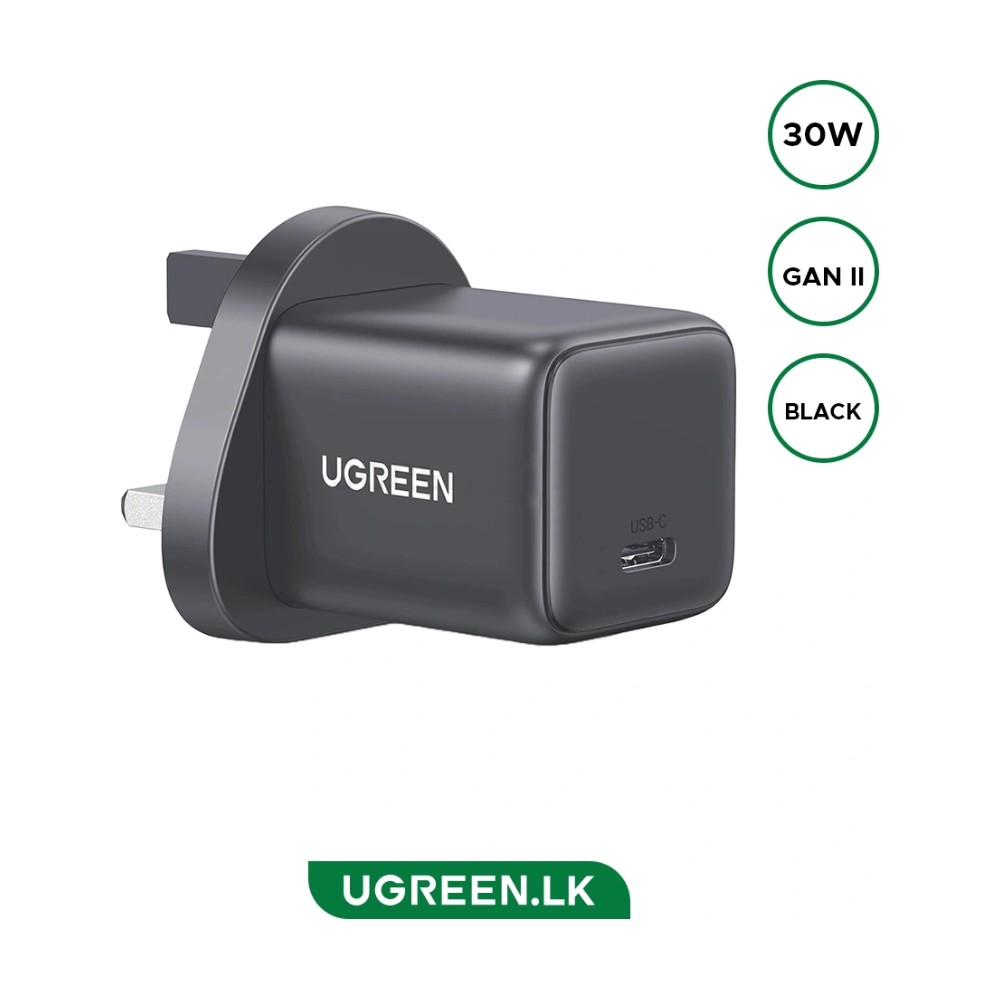
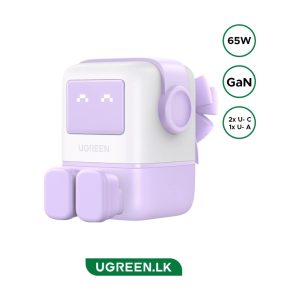
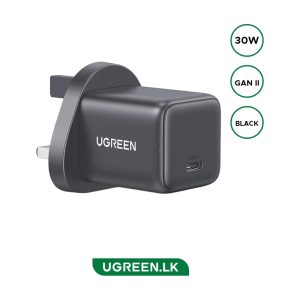
A wireless charger is only as fast as the adapter that powers it. Wireless charging loses some energy as heat, so a 25W wireless pad needs more than 25W in. Samsung, for example, specifies a 45W adapter for its 25W wireless charger to reach full speed, and many Qi2 25W pads recommend 30W or more. Use a USB-C Power Delivery adapter of the recommended wattage. The UGREEN 30W GaN charger at Rs 5,200 suits most Qi2 15W pads, and the UGREEN Uno 65W three-port charger at Rs 11,000 can power a 25W pad while charging a laptop or second phone. Our GaN charger guide explains wattage and ports.
Wireless versus wired: speed, heat and efficiency
Even at 25W, wireless charging is usually slower than wired fast charging, because phones reduce wireless power as they warm up and as the battery fills. Many phones charge at 25W to 45W or more over a USB-C cable. Wireless charging is also less efficient: some energy is lost as heat in the coils, which matters little for one phone overnight but shows up as warmth. Heat is the main enemy of battery health, so avoid wireless charging under a pillow or in a thick case, and take the phone off the pad if it gets hot.
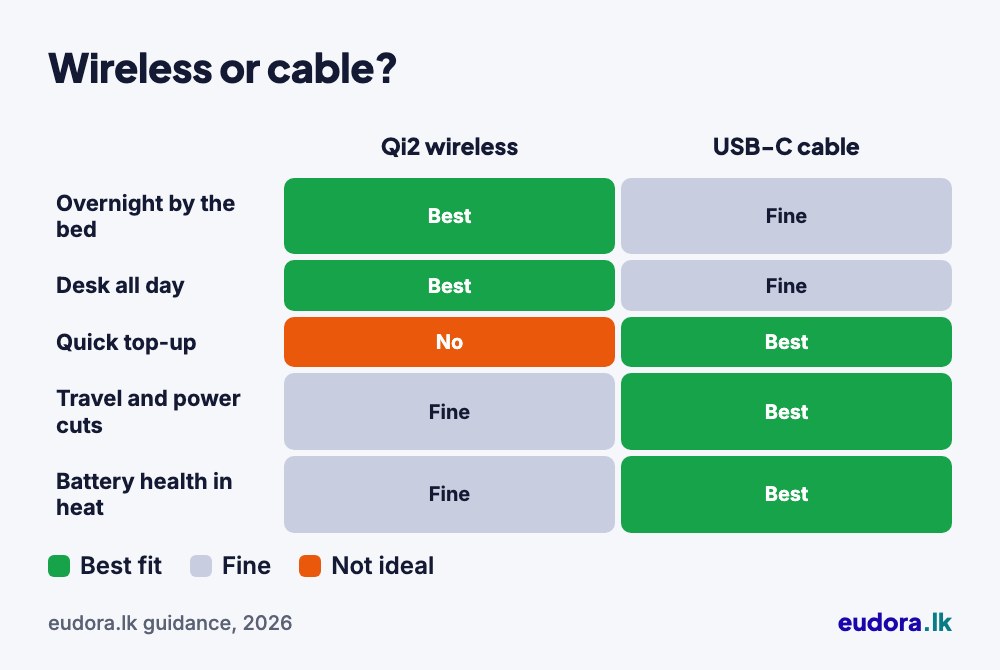
The practical approach many people use: wireless on the bedside table and desk for convenience, where speed does not matter, and a cable when you need a quick top-up before going out. Our guide to battery care explains why heat and staying at 100 percent wear batteries out, and the same applies to phones.
Magnetic power banks
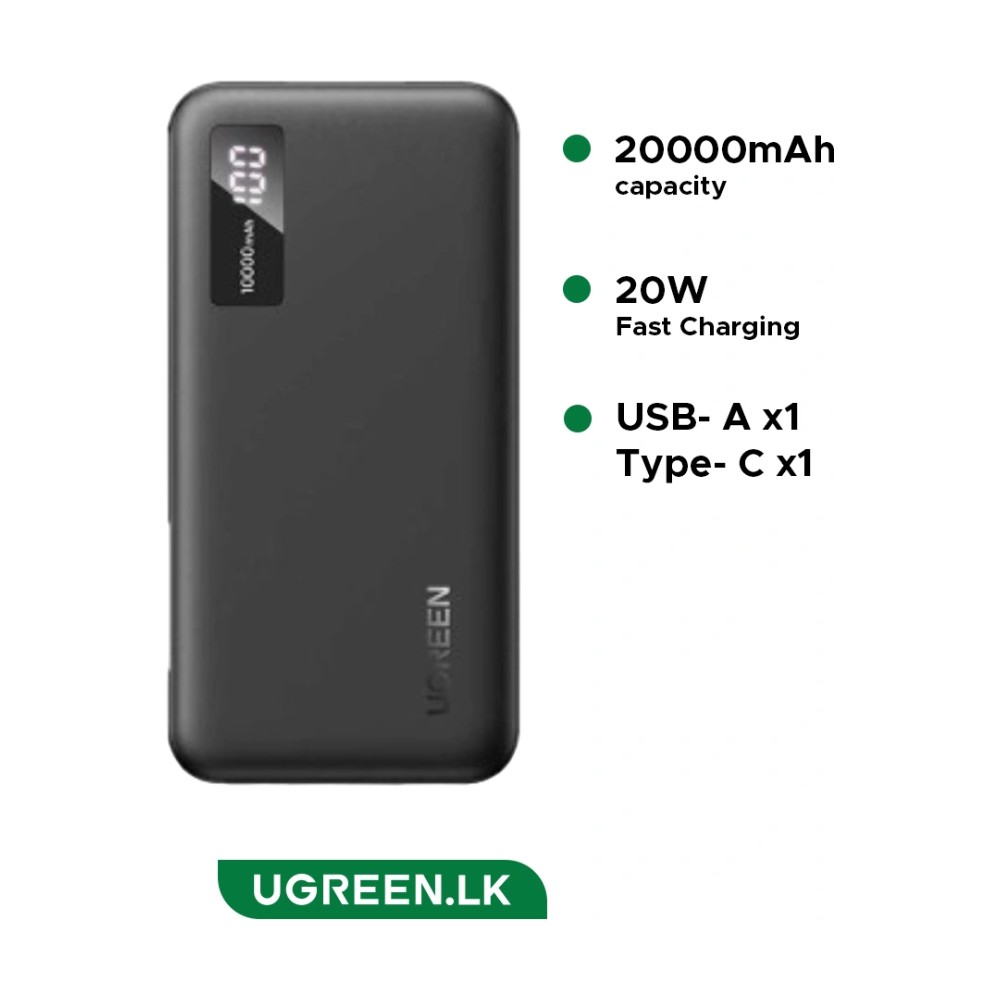
Qi2 magnetic power banks snap onto the back of the phone and charge it wirelessly while you use it, which is handy during power cuts or travel. They are convenient but less efficient than wired power banks, because some energy is lost as heat, so a 10,000mAh magnetic bank delivers fewer phone charges than a wired one of the same capacity. For maximum charge per rupee, a wired USB-C power bank such as the UGREEN 20,000mAh at Rs 10,000 remains better value. Our power bank guide compares capacities.
Buying a Qi2 charger: what to check
- Certification: look for the official Qi2 or Qi2 25W logo; uncertified “magnetic chargers” often charge slowly or run hot.
- Your phone’s support: a 25W pad charges a 15W phone at 15W.
- Adapter included or not: many pads ship without one; budget for a suitable USB-C adapter.
- Cooling: faster pads and stands often include a small fan; check noise if it will sit by the bed.
- Form factor: flat pad, stand for video calls, or multi-device station for phone, watch and earbuds.
In the car
Magnetic car mounts are one of the best uses of Qi2. The phone snaps onto the mount at any angle for navigation, charges while it sits there and comes off with one hand, without fiddling with clamps or cables. Choose a certified Qi2 mount powered from a USB-C car charger of the recommended wattage, and mount it where air from the vents can reach it, because a phone running maps in direct sunlight on a Sri Lankan afternoon can get hot enough to slow or pause charging. A vent-mounted charger with the air conditioning on usually keeps the phone cooler than a dashboard mount in the sun.
Safety and counterfeit chargers
Cheap uncertified wireless chargers are widely sold online and in markets. Some lack proper foreign object detection, the safety feature that stops charging when a coin, key or card is between the phone and the pad, and those metal objects can become very hot. Others misreport their power and charge far more slowly than advertised. Buy from reputable brands and sellers, look for the official certification logo, keep metal objects and bank cards off the pad, and remove cases that contain metal plates or card wallets. If a charger or phone gets uncomfortably hot, unplug it and use a cable instead.
Does wireless charging fit an office?
At a desk, a Qi2 stand keeps the phone upright for notifications and video calls and charges it all day without cables plugged and unplugged. For hot-desking offices, a shared charging station with a few Qi2 pads lets staff top up phones without everyone bringing chargers. For laptops and tablets, USB-C remains the standard, and our guide to the universal USB-C charger explains why one charger can now power most devices.
Smartwatches and earbuds add another layer: many use their own charging pucks or the older Qi standard, so check that a three-in-one station supports your particular watch model before buying it. Apple Watch, Galaxy Watch and Pixel Watch chargers all differ.
Looking ahead
With Google, Samsung and Apple all supporting magnetic Qi2 charging, accessories that once only worked with iPhones now work across brands: car mounts, stands, wallets and power banks. Expect more mid-range phones with built-in magnets and 25W support over the next year, and a wider range of certified chargers at lower prices. If your current phone lacks magnets, a Qi2-ready case is an inexpensive way to try the ecosystem before your next upgrade.
-
 UGREEN
 Nexode 20000mAh 100W Power Bank – Laptop Fast Charging
Rs 19,000
Add to cart
-
 UGREEN
 20000mAh 20W Power Bank – Two-way Fast Charging, 3 Ports
Rs 10,000
Add to cart
-
 UGREEN
 Uno 65W 3-Port GaN Charger – 2× USB-C, 1× USB-A, UK Plug
Rs 11,000
Add to cart
-
 UGREEN
 30W USB-C GaN Fast Charger – UK Plug
Rs 5,200
Add to cart
Frequently asked questions
Is Qi2 the same as MagSafe?
Qi2 is based on Apple’s MagSafe magnet design but is an open standard any manufacturer can use. iPhones work with Qi2 chargers.
Will a Qi2 charger work with my Android phone?
If the phone supports Qi wireless charging, yes, though without built-in magnets you need a magnetic case for alignment.
Is Qi2 25W as fast as cable charging?
Usually not. Wired USB-C fast charging is generally faster and more efficient.
What adapter do I need?
A USB-C Power Delivery adapter of the wattage the charger recommends, often 30W to 45W for 25W charging.
Does wireless charging damage the battery?
Not by itself, but heat does. Avoid charging in hot places or under covers.
This article was originally published on eudora.lk.